
What to remember
- Puppies can outgrow harnesses and collars quickly.
- Crate dividers can help when safe and appropriate.
- Recheck fit weekly during fast growth periods.
Sizing Data Used On This Page
Harness measurements and checks
Measurement inputs
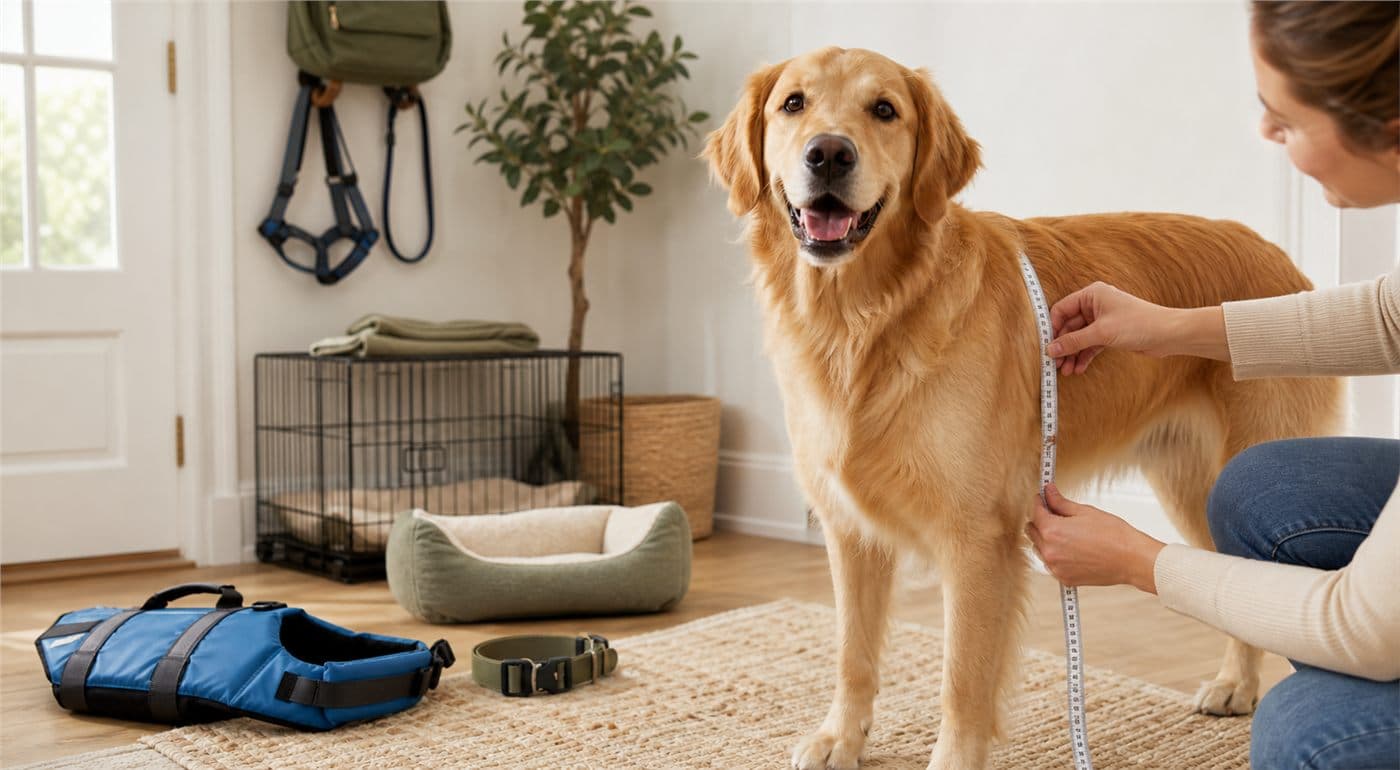
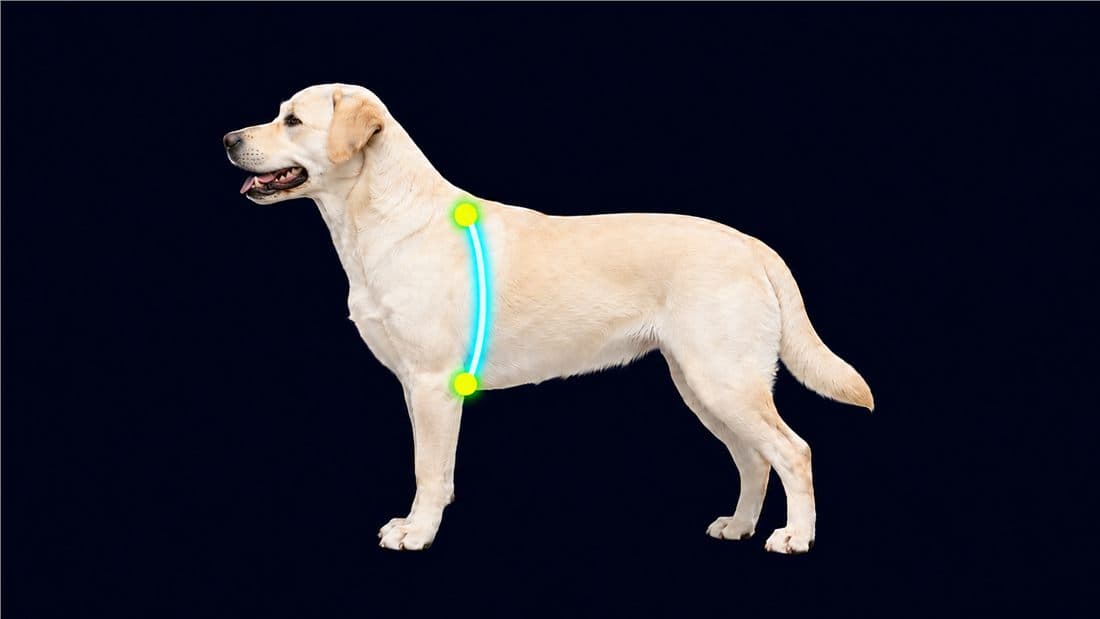
- Wrap the tape around the widest part of the chest.
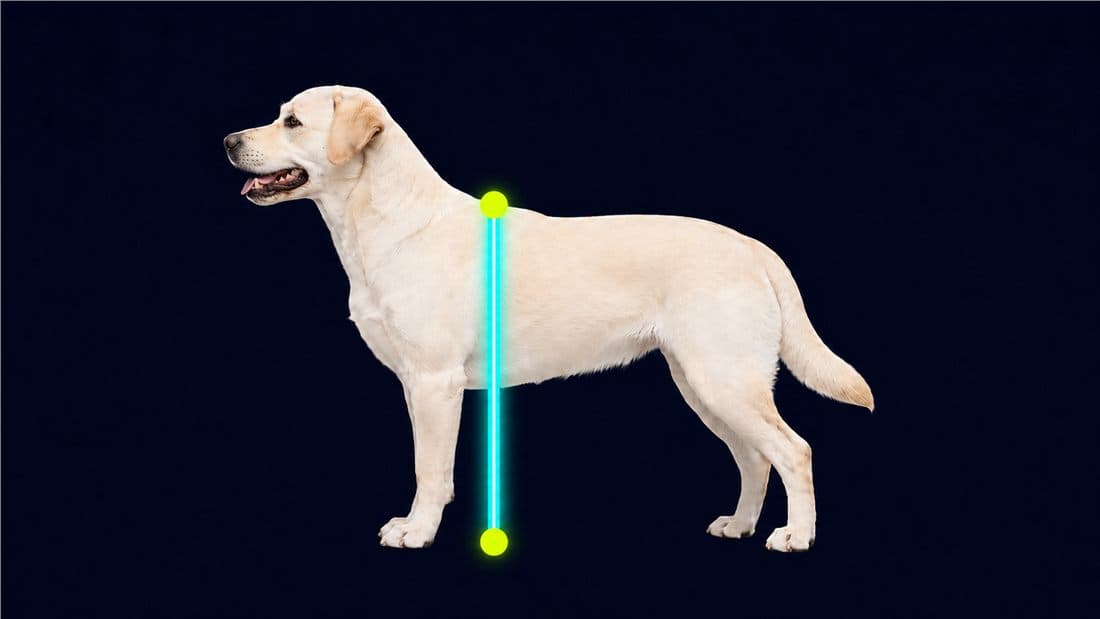
- Check the lower neck if the harness has a neck opening.
- Leave room for comfortable movement without gapping.
Common sizing mistakes
- Relying only on breed or weight.
- Measuring too close to the front legs.
- Ignoring coat thickness and seasonal grooming.
Fit checklist
- Chest strap sits behind front legs.
- Two fingers fit under straps.
- No rubbing at armpits.
- Clip and hardware are secure.
Useful product features
- Multiple adjustment points
- Soft everyday padding
- Front and back leash rings
- Reflective trim
Breed examples from the SizeMyPet dataset
Golden Retriever
Large size category
Typical adult range: 55-75 lb
Labrador Retriever
Large size category
Typical adult range: 55-80 lb
German Shepherd
Large size category
Typical adult range: 50-90 lb
Beagle
Medium size category
Typical adult range: 20-30 lb
French Bulldog
Small size category
Typical adult range: 16-28 lb
Pembroke Welsh Corgi
Small size category
Typical adult range: 22-31 lb
Buy Adjustable Where Fit Changes Fast
Harnesses and collars are the first products puppies often outgrow. Adjustable ranges help, but they still need to fit securely today. Gear that is too large can slip, rub, or fail before the puppy grows into it.
- Choose harnesses with multiple adjustment points.
- Recheck collar fit with the two-finger rule.
- Do not leave loose gear on unsupervised puppies.
Use Crate Dividers Carefully
A crate that fits adult size may be too roomy for a small puppy. Divider crates can help by shrinking usable space during house training while still allowing the puppy to stand, turn, and lie down.
- Set the divider so the puppy has comfortable but not excessive space.
- Move the divider as the puppy grows.
- Check latch strength and safe edges before use.
Avoid Buying Too Far Ahead
Growth charts and breed estimates help with planning, but individual puppies vary. Buy essentials that fit now, then use adjustable products or lower-cost temporary gear for stages where size changes quickly.
- Do not buy final adult harness size too early.
- Use breed adult ranges only as a planning guide.
- Track weight and measurements every few weeks.
Recheck Safety Products First
Life jackets, recovery cones, and restraint-related gear should not be treated as grow-into products. If the product is for safety or recovery, current fit matters more than future value.
- Use current measurements for life jackets.
- Follow veterinarian instructions for recovery cones.
- Replace gear that no longer adjusts securely.
Common questions
Should puppy gear be bought big?
Only if it still fits safely now. Gear that is too large can slip, rub, or fail before the puppy grows into it.
How often should I recheck puppy gear fit?
During fast growth, recheck collars and harnesses at least weekly and anytime the puppy gains weight or looks uncomfortable.